Proxmox, Kubernetes, and the Joys of Modern Infrastructure: Taking the Mystery Out of Tech Stacks
The New Building Blocks of Digital Infrastructure
Remember when setting up a company's IT infrastructure meant rows of humming servers, complex cooling systems, and a dedicated team just to keep the lights on? Those days are rapidly becoming a distant memory. Today's modern infrastructure is more like digital Lego – flexible, modular, and remarkably powerful when assembled correctly.
At Wolf Software Systems, we regularly guide clients through the infrastructure modernization journey. Two technologies consistently stand out as game-changers: Proxmox and Kubernetes. But for many businesses, these remain mysterious black boxes of technical jargon. Let's change that.
What is Proxmox, and Why Should You Care?
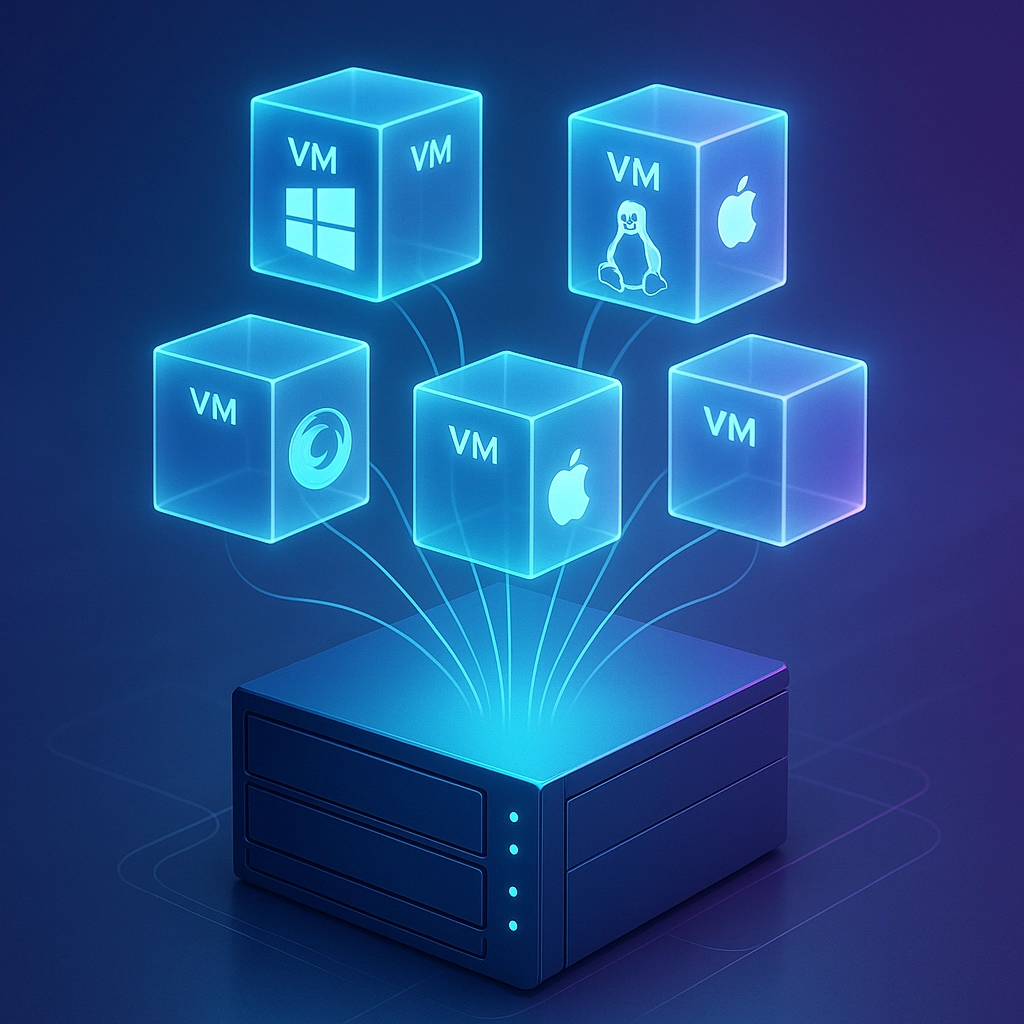
Proxmox Virtual Environment (Proxmox VE) is an open-source virtualization platform that combines two powerful virtualization technologies under one roof: KVM (Kernel-based Virtual Machine) for virtual machines and LXC (Linux Containers) for containers.
In plain English? Proxmox lets you run multiple separate operating systems and applications on a single physical server. It's like having several computers running independently within one piece of hardware.
Key Proxmox Benefits:
- Resource Optimization: Run numerous workloads on fewer physical machines, drastically reducing hardware costs and energy consumption.
- User-Friendly Management: Control everything through an intuitive web interface – no command-line wizardry required.
- Built-in High Availability: Keep critical systems running even when hardware fails.
- Enterprise Features Without Enterprise Costs: Enjoy capabilities that previously required expensive proprietary solutions.
For businesses still running applications on individual physical servers or struggling with outdated virtualization platforms, Proxmox represents a significant leap forward in both capability and cost-effectiveness.
Enter Kubernetes: The Container Orchestra Conductor
If Proxmox is about efficiently running multiple systems, Kubernetes is about orchestrating what runs inside them. Originally developed by Google and now maintained by the Cloud Native Computing Foundation, Kubernetes (often abbreviated as K8s) has become the de facto standard for container orchestration.
Containers are lightweight, standalone packages of software that include everything needed to run an application. Kubernetes manages these containers at scale, handling crucial tasks like:
- Automated Deployment: Roll out new versions of your applications without downtime.
- Self-Healing: Automatically restart containers that fail or replace containers that don't respond.
- Horizontal Scaling: Add more instances of your application with a simple command when demand increases.
- Load Balancing: Distribute network traffic to ensure no single instance becomes a bottleneck.
- Storage Orchestration: Mount storage systems of your choice, whether local or cloud-based.
Why Kubernetes Matters for Modern Businesses:
The technical benefits of Kubernetes translate directly to business value:
- Faster Time to Market: Deploy new features and updates in minutes rather than days or weeks.
- Reduced Operational Costs: Automate manual processes that previously required dedicated personnel.
- Improved Reliability: Eliminate downtime through automatic failover and self-healing.
- Cloud Flexibility: Run your applications consistently across any environment – public cloud, private cloud, or hybrid.

The Perfect Partnership: Proxmox + Kubernetes
While powerful independently, Proxmox and Kubernetes truly shine when used together. Think of Proxmox as the foundation and Kubernetes as the framework built upon it. This combination delivers several unique advantages:
1. Complete Infrastructure Control
Proxmox provides the virtualization layer, giving you direct control over the physical hardware resources. Kubernetes then manages how applications run within that environment. This end-to-end control means no unexpected cloud billing surprises or third-party dependencies.
2. Optimal Resource Utilization
Proxmox ensures efficient use of hardware resources through virtualization, while Kubernetes optimizes how applications use those resources through container orchestration. The result is maximum efficiency at both the hardware and application levels.
3. On-Premises Power with Cloud-Like Flexibility
Many businesses need to keep certain workloads on-premises for compliance, security, or performance reasons. This combination delivers cloud-like capabilities without requiring actual public cloud services.
4. Cost-Effective Scaling
Rather than paying per-minute for cloud resources, you can scale your infrastructure based on actual hardware costs. For predictable workloads, this often results in significant savings compared to public cloud providers.
Demystifying the Technical Complexity
One reason these technologies can seem intimidating is their perceived complexity. Let's address some common myths:
Myth 1: "You need a team of specialists to run these systems"
Reality: While deep expertise is valuable, modern management tools have significantly reduced the learning curve. At Wolf Software Systems, we help clients establish these platforms with appropriate monitoring and management interfaces that make day-to-day operations accessible to IT generalists.
Myth 2: "These are only for large enterprises"
Reality: The scalability of these tools works in both directions. A Proxmox cluster can start with just three nodes (or even one for non-production environments), and Kubernetes can be right-sized for small applications. We've implemented these solutions for businesses with as few as 10 employees.
Myth 3: "The migration process is too disruptive"
Reality: With proper planning, migrations can be phased and minimally disruptive. The containerization process often becomes an opportunity to modernize applications and improve their performance and reliability.
Real-World Applications: Beyond the Buzzwords
To understand the practical impact of these technologies, let's look at how businesses are using them:
E-commerce Platform Modernization
A mid-sized retailer was struggling with site performance during sales events. By migrating to a Proxmox-based infrastructure running Kubernetes, they gained:
- 60% reduction in infrastructure costs
- 99.99% uptime (up from 98%)
- Ability to handle 5x normal traffic during peak sales without performance degradation
Financial Services Data Processing
A financial services firm needed to process increasing volumes of transaction data while meeting strict regulatory requirements:
- Containerized data processing pipelines reduced batch processing time by 70%
- On-premises Proxmox cluster ensured data never left their secure environment
- Automated scaling handled end-of-month processing peaks without manual intervention

Software Development Efficiency
A software development company improved their development lifecycle:
- Standardized development, testing, and production environments eliminated "it works on my machine" issues
- Reduced deployment time from hours to minutes
- Automated testing and deployment pipelines improved code quality and reduced bugs
Getting Started: Your Path to Modern Infrastructure
The journey to modernizing your infrastructure with Proxmox and Kubernetes typically follows these stages:
- Assessment: Evaluate your current infrastructure, applications, and specific requirements
- Planning: Design the target architecture and migration strategy
- Pilot Implementation: Start with non-critical workloads to validate the approach
- Migration: Systematically move applications to the new infrastructure
- Optimization: Fine-tune the environment for performance, reliability, and cost-effectiveness
At Wolf Software Systems, we guide clients through each of these stages, providing the expertise needed while transferring knowledge to your team.
Conclusion: Infrastructure as a Competitive Advantage
The days when infrastructure was just a cost center are over. Modern infrastructure technologies like Proxmox and Kubernetes create tangible business advantages through greater agility, reliability, and efficiency.
By demystifying these powerful tools, we hope to show that they're accessible to businesses of all sizes. The technical complexity can be managed with the right approach and expertise, allowing you to focus on the outcomes rather than the underlying machinery.
Ready to explore how modern infrastructure can transform your business? Contact Wolf Software Systems for a no-obligation consultation. We'll help you understand the specific benefits these technologies can bring to your unique situation.