Modernizing Mission-Critical Systems: Lessons from Our Latest Success Stories
The High-Stakes Challenge of Legacy Transformation
In today's rapidly evolving digital landscape, many organisations find themselves at a critical crossroads: continue maintaining aging, mission-critical systems that underpin core business operations, or embark on the complex journey of modernisation. At Wolf Software Systems, we've guided dozens of businesses through this transformation, and one thing remains constant – modernising mission-critical systems is never just a technical challenge, but a business imperative that requires careful planning, expertise, and a proven methodology.
Mission-critical systems – those applications that directly support essential business functions where even minutes of downtime translate to significant financial or operational impact – often represent the greatest modernisation challenge. They're typically the oldest, most complex, and most deeply embedded within an organisation's technical ecosystem.
This article shares key insights and lessons from our most successful modernisation projects, offering a roadmap for businesses considering their own transformation journey.
Why Mission-Critical Systems Resist Change
Before diving into success stories, it's important to understand why these systems present unique challenges:
- Risk aversion: When a system handles millions in transactions or critical operations, the tolerance for disruption approaches zero.
- Technical debt accumulation: Years of patches, workarounds and customisations create a complex web that's difficult to untangle.
- Institutional knowledge gaps: Original developers may have left, taking critical system knowledge with them.
- Integration complexity: These systems often connect to dozens of other applications across the enterprise.
- Compliance requirements: Regulatory frameworks add layers of complexity to any modernisation effort.
Case Study 1: Financial Services – Modernising Without Disruption
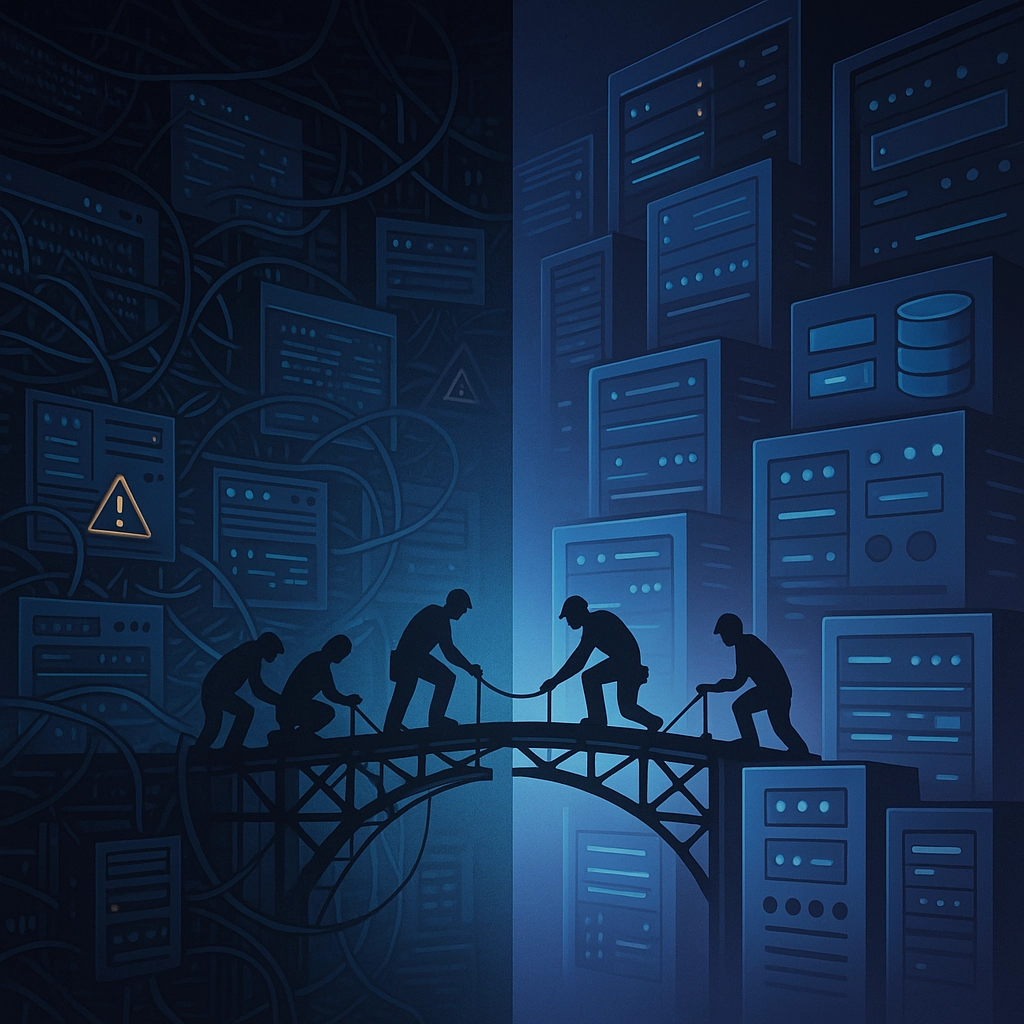
One of our most challenging projects involved a mid-sized financial services firm operating with a mission-critical trading platform built in the early 2000s. The system processed over £50 million in daily transactions but was becoming increasingly unstable and costly to maintain.
The Challenge:
- 15+ year old codebase written in a mix of legacy technologies
- 99.99% uptime requirement with no tolerance for service interruption
- Complex integrations with 23 downstream systems
- Regulatory compliance requirements necessitating robust audit trails
Our Approach:
We implemented a phased modernisation strategy that involved:
-
Comprehensive system archaeology – Our team spent six weeks documenting system behavior, integration points, and business rules, creating a complete functional map.
-
Strangler pattern implementation – Rather than a risky "big bang" replacement, we gradually encapsulated legacy functionality behind modern APIs, allowing incremental modernisation.
-
Parallel running with monitoring – New components ran alongside legacy ones with automated comparison of outputs to ensure functional equivalence.
-
Automated testing framework – We built an extensive test suite to ensure every modernised component maintained perfect compatibility.
The Results:
- Zero disruption to daily operations during the 14-month modernisation
- 70% reduction in operating costs post-modernisation
- 90% faster deployment of new features
- Enhanced security posture and simplified compliance reporting
"Wolf Software's methodical approach allowed us to transform our most critical system without our customers experiencing a single minute of downtime. The modernised platform has given us capabilities we simply couldn't have implemented on our legacy stack." – CTO, Financial Services Client
Case Study 2: Healthcare System Integration
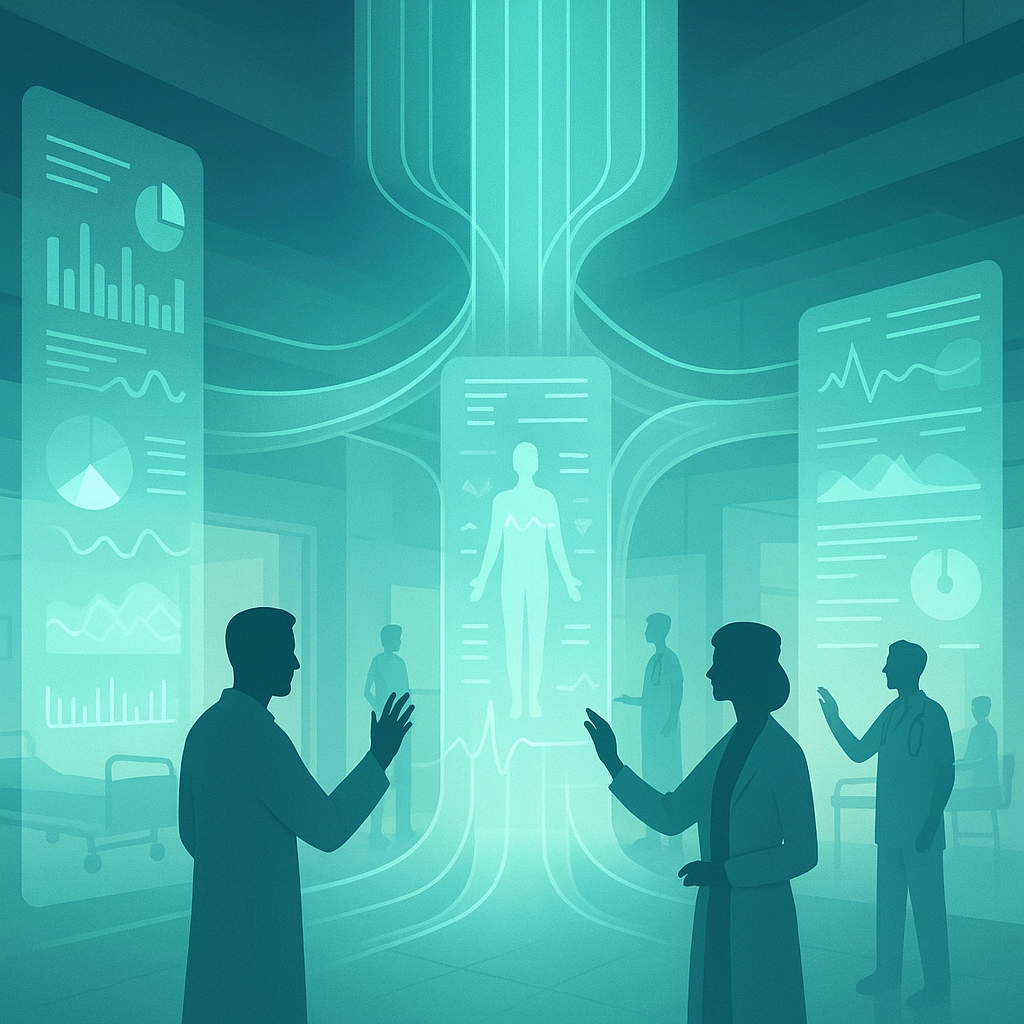
Another significant success story involves a healthcare provider struggling with disconnected clinical systems that couldn't effectively share patient data across departments.
The Challenge:
- Multiple legacy systems storing critical patient data in isolation
- Strict GDPR and healthcare data protection requirements
- Need for real-time data access across previously siloed systems
- Limited IT budget and resources
Our Approach:
We designed a modernisation strategy centered on:
-
API middleware layer – Rather than replacing systems outright, we created a modern integration layer that connected legacy applications.
-
Data standardisation – We implemented healthcare data standards (HL7 FHIR) to ensure consistent information exchange.
-
Incremental modernisation roadmap – We prioritised high-value integrations first, demonstrating ROI to secure ongoing investment.
-
Cloud-native architecture – The new integration layer was built using containerized microservices for scalability and resilience.
The Results:
- 65% reduction in time spent manually transferring patient information
- 35% decrease in duplicate diagnostic testing
- Significant improvement in patient care coordination
- Foundation established for future AI-driven clinical decision support
Case Study 3: Manufacturing Systems Overhaul
A manufacturing client faced the challenge of modernising their production control systems while maintaining 24/7 operations across multiple facilities.
The Challenge:
- Control systems written in obsolete programming languages
- Hardware approaching end-of-life with no replacement parts available
- Custom interfaces to specialized manufacturing equipment
- No comprehensive system documentation available
Our Approach:
We developed a multi-stage strategy:
-
System documentation and knowledge capture – We reverse-engineered system behavior and created comprehensive documentation.
-
Containerization of legacy components – Where possible, we encapsulated legacy code in containers to improve portability.
-
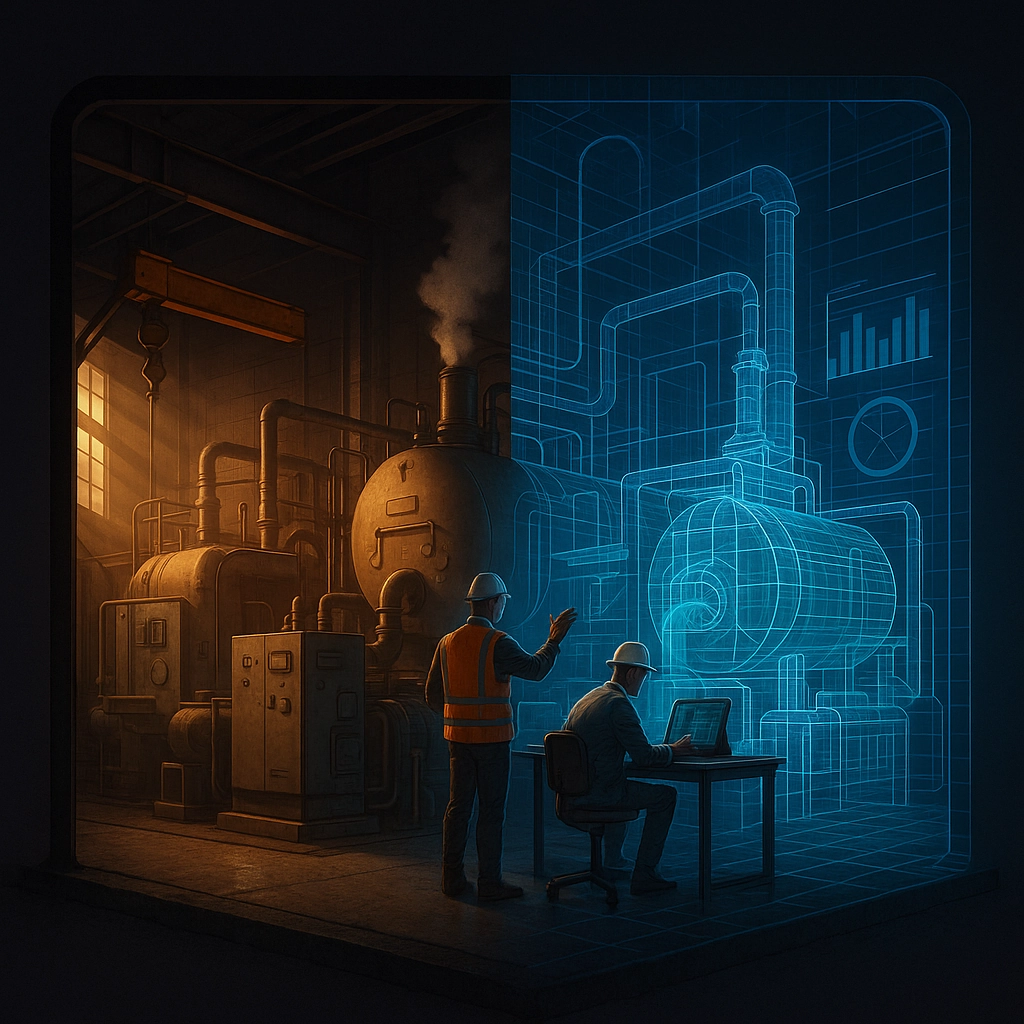
Digital twin development – We created simulated environments to test changes without risking production systems.
-
Gradual component replacement – Beginning with non-critical systems, we replaced components one by one during scheduled maintenance windows.
The Results:
- 40% reduction in unplanned downtime
- 55% improvement in system performance
- Modern architecture supporting IoT integration for predictive maintenance
- Complete, up-to-date system documentation
Key Lessons for Successful Modernisation
Across our projects, several common factors have proven critical to successful mission-critical systems modernisation:
1. Start With Deep System Understanding
Before changing a single line of code, invest in thoroughly understanding the existing system's behavior, interfaces, and business rules. What might appear as technical debt could actually be accommodating important edge cases.
2. Prioritise Business Continuity
Design your modernisation approach around minimizing operational risk. This often means longer project timelines but significantly reduces business disruption. The phased approach costs more upfront but dramatically lowers overall project risk.
3. Embrace Incremental Change
The most successful modernisation projects we've delivered use an incremental approach rather than complete rewrites. Each phase delivers business value and builds confidence for subsequent changes.
4. Implement Comprehensive Testing
Automated testing becomes your safety net during modernisation. Invest heavily in test automation that verifies both technical functioning and business outcomes. Our most successful projects often have more lines of test code than application code.
5. Plan for Knowledge Transfer
Modernisation provides the perfect opportunity to address knowledge gaps. Document not just what the system does, but why certain decisions were made. This becomes invaluable for future maintenance and enhancements.
The Wolf Software Systems Approach to Modernisation
At Wolf Software Systems, our modernisation methodology has been refined through dozens of successful projects. We combine technical expertise with a business-focused approach that:
- Minimises risk through careful planning and incremental implementation
- Maximises business value by prioritising high-impact improvements
- Ensures knowledge transfer throughout the project lifecycle
- Creates sustainable solutions designed for future adaptability
- Maintains operational continuity as the primary requirement
Our team brings expertise across legacy and modern technologies, enabling us to bridge the gap between established systems and new capabilities without sacrificing reliability.
Start Your Modernisation Journey
If your organisation is struggling with aging mission-critical systems, the first step isn't technical—it's strategic. Begin by assessing the business impact of your current limitations and defining clear objectives for modernisation beyond just updating technology.
The most successful modernisation initiatives we've led have started with a comprehensive discovery phase to understand current systems, followed by a clear roadmap that balances risk mitigation with business value delivery.
Ready to explore how your mission-critical systems could be modernised without risking business continuity? Contact our team for a no-obligation assessment of your current systems and potential modernisation approaches.
Wolf Software Systems specialises in modernising mission-critical applications for organisations across financial services, healthcare, manufacturing, and government sectors. Our methodical approach ensures business continuity while delivering modern, adaptable systems that support your future growth.