A Flaw in the UK Driving Test Booking System: How One Change Could Eliminate the Need for Bots

The Current Booking System: Designed for Frustration
For anyone who’s recently tried to book a practical driving test in the UK, the experience can be summed up in one word: frustrating. Not only are test slots in high demand, but the online booking system itself is fundamentally flawed in its approach—and it’s causing real headaches for learners, parents, instructors, and even employers across the country.
Instead of helping aspiring drivers find a nearby test with minimal hassle, the system’s design leads to endless virtual queues, rampant use of “bots,” and—for many—an expensive detour into the world of third-party appointment-finding services. The outcome? Ordinary people are being forced to pay extra, wait longer, and sometimes travel hundreds of miles just to get behind the wheel for a test.
Let’s break down the problem and look at how one basic change could put this right.
Why Are Bots Winning, and Learners Losing?
The 6am Madness
Every Monday at exactly 6am, the Driver and Vehicle Standards Agency (DVSA) releases thousands of new test appointments. It’s all there, public knowledge, right on their official website. This predictability has invited the creation of thousands of bots—automated programmes designed to snap up open slots at lightning speed.
As soon as appointments are released, queues of up to 30,000 hopefuls form virtually overnight. While real learners are groggy-eyed, patience tested by long browser waits and pages failing to load, bots are working non-stop, booking slots up and down the country. 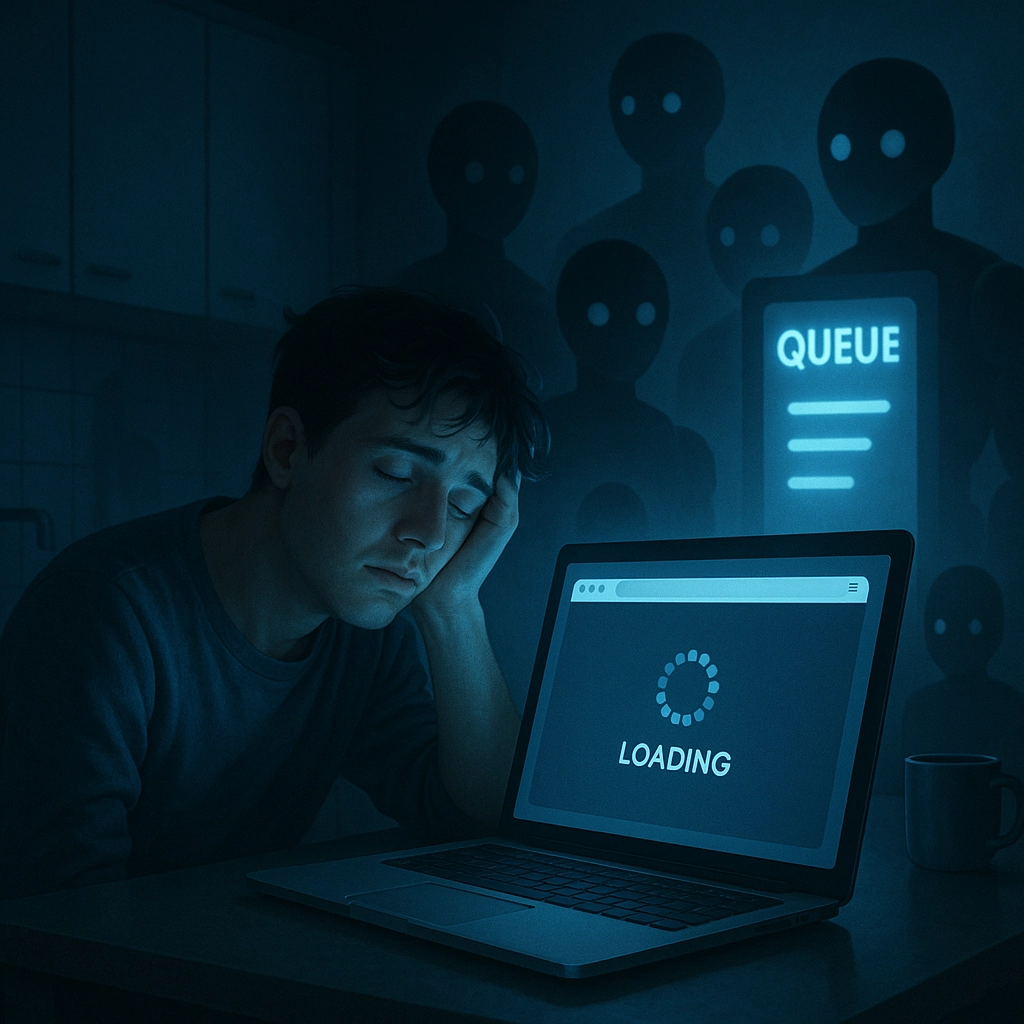
How the Bots Do It
Bots aren’t science fiction. They’re bits of code designed to automate repetitive online actions. While humans click buttons and type in details, bots can mimic these behaviours in milliseconds, bypassing basic security (like CAPTCHAs and login prompts) that’s applied unevenly across the DVSA’s website.
Some businesses have reportedly created entire fleets of semi-legit “business accounts”, snatching up blocks of appointments and then reselling them at a profit. The DVSA has closed hundreds of these accounts, but it’s a whack-a-mole game—the core weakness remains unaddressed.
The Human Cost
What’s it like for real people? Here’s a typical scenario:
- After days (or weeks) of refreshing the page, a learner finds nothing available within 100 miles.
- They give in and book a slot at a remote centre—the only one shown as available.
- Sometimes, they get blocked for “unusual activity” just for checking the system too often.
Meanwhile, social media and chat groups are flooded with tips for booking bots, and cottage industries have sprung up where companies charge £50 or more just to find a test on your behalf.
The Actual Design Flaw
At its core, the flaw isn’t about technology failing; it’s about technology being shaped by outdated assumptions. The DVSA’s system currently asks users to search by test centre location. It then returns appointments for only that centre or a short list nearby. This means:
- Many learners never see perfectly good cancellations or earlier appointments that are just a bit further away.
- Bots, meanwhile, can search every centre across the country in seconds, securing any available slot and then offering it to the highest bidder.
The release schedule compounds the problem: everyone is tipped off to the “gold rush” window, which unintentionally rewards those who can automate the process or pay someone who can.

The Simple Solution: Search By Test Date, Not Just By Centre
There’s a simple, elegant alternative to this dead-end design: invert the search.
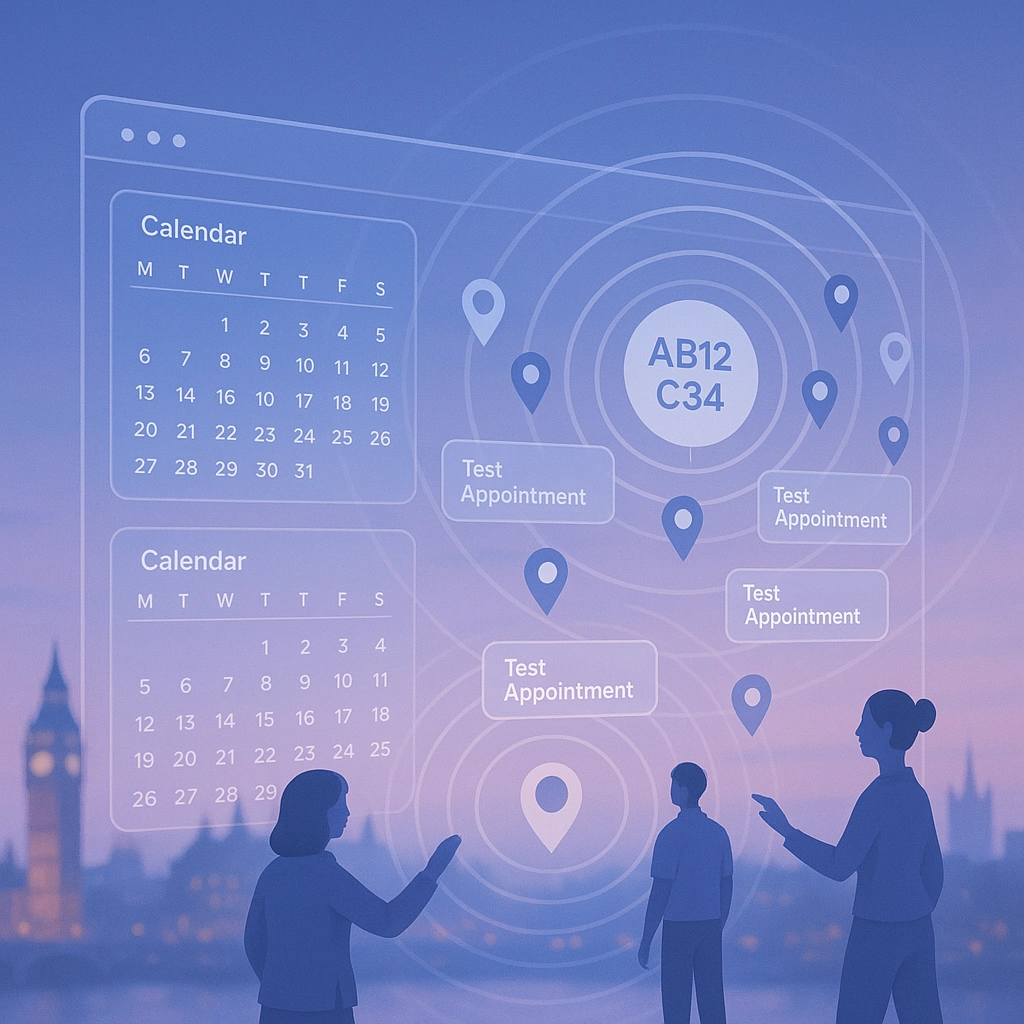
Instead of filtering appointments by what test centres are nearby, let users search by location… but then show every available test slot, sorted from the closest outwards.
- Imagine seeing a timeline.
- The system would automatically display all available slots at all centres, in a single go. Sorted by the locations nearest to them. In fact the user should be able to choose to sort by distance or date.
- Learners pick what works best, whether it’s the soonest date, the most convenient location, or a balance between the two.
And crucially, this approach destroys the business model for the bots and appointment-finder companies: all the useful data is already listed. No need to pay a third party or rely on automated scripts—everyone has fair, simultaneous access.
Additional Benefits of a System Overhaul
1. Level Playing Field
No more advantages for those willing to pay for bots or rescheduling services. Everyone interacts with the same, transparent pool of appointments, reducing the power of resellers.
2. Lower Server Load, Fewer Crashes
A more intuitive system—especially if combined with scattering the addition of new appointments (rather than dumping them all at 6am)—means less mobbing of the website at one time, improving reliability for all users.
3. Less Wasted Time
By showing all viable appointments up front, learners spend less time refreshing pages and calling around, and more time preparing for their tests.
4. Support for Instructors and Employers
Driving instructors and companies who need to help multiple candidates benefit most. With a single view of upcoming slots, they can manage bookings efficiently and reduce administrative headaches.
If It’s So Obvious, Why Hasn’t It Changed?
The main reason such redesigns lag behind isn’t technological—it’s bureaucratic. Many government IT platforms are slow to change, and outdated procurement contracts often lock in underwhelming user experiences for years. But with mounting public frustration, media attention, and evidence of lost productivity (not to mention direct costs to learners), change is overdue.
Moving to a more modern, user-centred system is far from a technical challenge. It’s basic web development and data handling—problems solved in countless online marketplaces and appointment systems elsewhere.
A Real-World Example: What Effective Booking Looks Like
Outside the world of driving tests, online ticket sites and booking platforms have been showing users “all available options, in one place” for decades—whether you’re reserving theatre seats, train tickets, or vaccines. Bringing this mindset to the DVSA booking system would instantly make scammers and bots obsolete.
Imagine logging in, entering your postcode, and immediately seeing a grid of upcoming test dates and locations, all sorted by distance and date. No need to fill in five forms, or wake up at 5:45am on a Monday to beat the bots.
Final Thoughts: A Fairer System for All
Technology shouldn’t force ordinary people to become hackers just to get everyday services. The UK’s driving test booking system can work for learners, not against them—with a single, logical redesign.
A driving test is already a stressful milestone for young people, families, and the businesses that employ them. Let’s not make the online booking process harder than the test itself.
At Wolf Software Systems Ltd, we specialise in building scalable, secure platforms where transparency and usability come first. If you’re interested in how better systems can transform public services and save money, learn more about our work here: https://wolf.uk.com/portfolio
Let’s make technology work for everyone—no bots required.