UK Air Traffic Control Software Meltdown: What Happened and How Modernisation Could Prevent Future Chaos
The 20-Minute Outage That Caused Days of Chaos
Yesterday's meltdown of the UK's air traffic control system sent shockwaves through the aviation industry and stranded thousands of passengers. What should have been a routine Wednesday turned into a nightmare for travelers when NATS (National Air Traffic Services) experienced a critical system failure at their Swanwick control center.
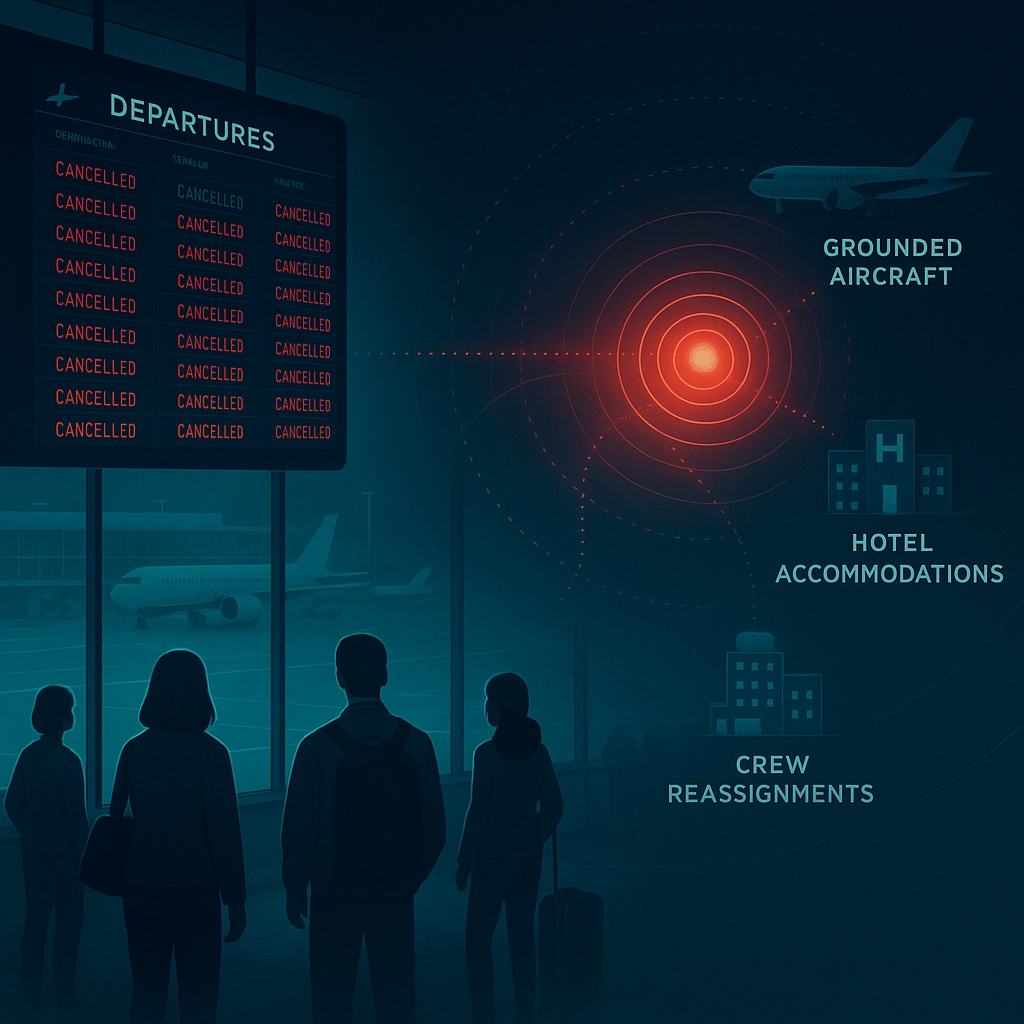
The outage itself lasted only 20 minutes, but the ripple effects were immediate and severe. Over 150 flights were canceled across major UK airports, including Heathrow, Gatwick, and Manchester. Heathrow was forced to reduce departures to just 32 per hour—a fraction of its normal capacity. Aircraft were put in holding patterns or diverted to alternate airports, creating a logistical nightmare that will take days to fully resolve.
This incident bears a striking resemblance to the August 2023 failure that affected approximately 700,000 passengers and cost the industry an estimated £127 million. The frequency of these disruptions raises serious questions about the resilience of critical national infrastructure and the technological approaches being used.

Understanding What Went Wrong
According to preliminary reports, yesterday's incident stemmed from a radar-related technical fault that required engineers to switch to backup systems. While NATS has been cautious about revealing specific details, industry experts point to underlying issues that have plagued the system since its launch in 2002.
The 2023 meltdown offers valuable insights into potential causes. That incident was triggered by a flight plan containing duplicate waypoint identifiers—essentially, the same geographic point appearing twice in a single flight plan. This seemingly minor data anomaly confused the flight processing system, causing both the primary and backup systems to shut down simultaneously. Processing capacity plummeted from 900 flight plans per hour to just 60 plans processed manually, creating a massive backlog.
What's particularly concerning about both incidents is how quickly a small technical issue cascaded into system-wide failure. Modern software architecture should include:
- Robust error handling that prevents single points of failure
- Intelligent data validation to catch anomalies before they cause problems
- True redundancy where backup systems operate independently of primary systems
- Graceful degradation rather than complete failure
None of these principles appear to have been effectively implemented in the current air traffic control infrastructure.
The True Cost of Outdated Systems
The financial impact of yesterday's disruption will likely run into the tens of millions of pounds. Airlines bear the brunt of these costs through:
- Compensation payments to passengers
- Aircraft repositioning expenses
- Crew overtime and accommodation
- Lost revenue from canceled flights
Beyond the immediate financial toll, there's significant reputational damage to both the UK aviation sector and NATS itself. Ryanair has already called for NATS CEO Martin Rolfe's resignation, citing ongoing issues and inadequate investment in resilient systems.
But the most overlooked cost may be the opportunity cost—what could these resources be used for if they weren't constantly directed toward crisis management and recovery? The aviation industry could be investing in innovation and improvement rather than repeatedly fixing the same fundamental problems.
Why Legacy Systems Are Vulnerable
The UK's air traffic control system, like many critical infrastructure components, suffers from technological debt—a consequence of building upon and patching legacy systems rather than comprehensively modernising them.
Many of these systems were designed and implemented in an era when:
- The volume of air traffic was significantly lower
- Cyber threats were less sophisticated
- Cloud computing and distributed systems weren't viable options
- Real-time data processing capabilities were limited
Today's aviation environment demands infrastructure that can handle exponentially more complex operations while maintaining perfect reliability. Legacy systems simply weren't designed with these requirements in mind.
At Wolf Software Systems, we regularly encounter similar challenges across industries. Organisations often continue to rely on mission-critical legacy applications because they "still work"—until they catastrophically don't. The parallels between air traffic control systems and outdated business software are striking, from vulnerability to data anomalies to insufficient redundancy mechanisms.
The Modernisation Roadmap: Preventing Future Meltdowns
What would a truly modern air traffic control system look like? Based on our experience modernising mission-critical software, several key approaches could dramatically improve resilience:
1. Cloud-Native Architecture
Modern cloud platforms offer unprecedented reliability through distributed computing. Rather than relying on single-location systems, a cloud-native approach would distribute processing across multiple geographic regions, ensuring that no single point of failure could bring down the entire network.
2. Microservices Over Monoliths
The current air traffic control system appears to operate as a monolith—when one component fails, everything fails. A microservices architecture would separate functions into independent, loosely-coupled services that can fail individually without compromising the entire system.
3. Real-Time Anomaly Detection
Machine learning systems could identify unusual patterns in flight data before they cause problems. For example, duplicate waypoints could be flagged and corrected automatically rather than crashing the system.
4. True Redundancy Engineering
Effective redundancy means more than just having backup systems—it requires engineering for independent operation. Backup systems should:
- Run on different hardware
- Use alternative power sources
- Potentially even use different software implementations
- Be regularly tested under full-load conditions
5. Graceful Degradation Protocols
Systems should be designed to maintain core functionality even when operating at reduced capacity. Yesterday's incident demonstrated how quickly an all-or-nothing system can cascade into total failure.

Learning From Other Industries
The financial services sector provides valuable lessons in building ultra-reliable systems. Stock exchanges and payment networks routinely process millions of transactions per second with 99.999% uptime requirements. These systems implement:
- Active-active architectures where multiple systems run simultaneously
- Automated failover with zero data loss
- Continuous deployment practices that allow for updates without downtime
- Chaos engineering to proactively identify weaknesses
Similarly, modern cloud providers like AWS, Microsoft Azure, and Google Cloud have pioneered approaches to building resilient infrastructure at massive scale. Their techniques for ensuring reliability could be applied to air traffic control systems.
The Human Element: Training and Protocols
Technology alone isn't enough. Yesterday's incident highlighted how critical human factors are during system failures. Reports indicate that communication breakdowns between NATS, airports, and airlines exacerbated the situation.
Comprehensive modernisation must include:
- Regular simulation of system failures to train staff
- Clear communication protocols for all stakeholders
- Streamlined escalation procedures when issues arise
- Cross-training to ensure knowledge isn't siloed with individual experts
At Wolf Software Systems, we ensure that technology transformations always account for the people who will be using and maintaining these systems. The most elegant technical solution will fail if users aren't properly equipped to work with it.
Moving Forward: A Pragmatic Approach
Complete modernisation of air traffic control systems represents a massive undertaking, but it doesn't have to happen all at once. A phased approach might include:
- Immediate risk assessment to identify the most vulnerable components
- Implementation of enhanced monitoring and alerting
- Gradual replacement of core processing components with modern alternatives
- Rigorous testing in parallel environments before deployment
- Continuous improvement based on real-world performance
This mirrors the approach we take with our clients at Wolf Software Systems. Rather than ripping and replacing entire systems overnight, we help organisations transition methodically to more resilient architectures while maintaining operational continuity.
Conclusion: A Watershed Moment
Yesterday's air traffic control meltdown should serve as a wake-up call—not just for NATS, but for any organisation relying on legacy systems for mission-critical operations. The costs of inaction are now abundantly clear.
Modern software architecture principles, cloud technologies, and proper redundancy engineering can prevent these types of failures. The tools and methodologies exist—what's required is the commitment to implement them.
As we've seen with clients across banking, healthcare, and manufacturing, modernisation isn't just about avoiding failure—it's about creating new capabilities and opportunities. The organisations that embrace this transformation don't just survive; they thrive.
If your business relies on legacy software systems that keep you awake at night, perhaps it's time to explore how modern approaches could transform reliability and create new possibilities. The alternative—waiting for your own version of yesterday's meltdown—is a risk that grows more costly with each passing day.
Wolf Software Systems specialises in modernising mission-critical legacy applications. Contact us to discuss how we can help your organisation avoid its own "air traffic control moment."